


AI-generated illustration.
The Work Beyond the Flower Table
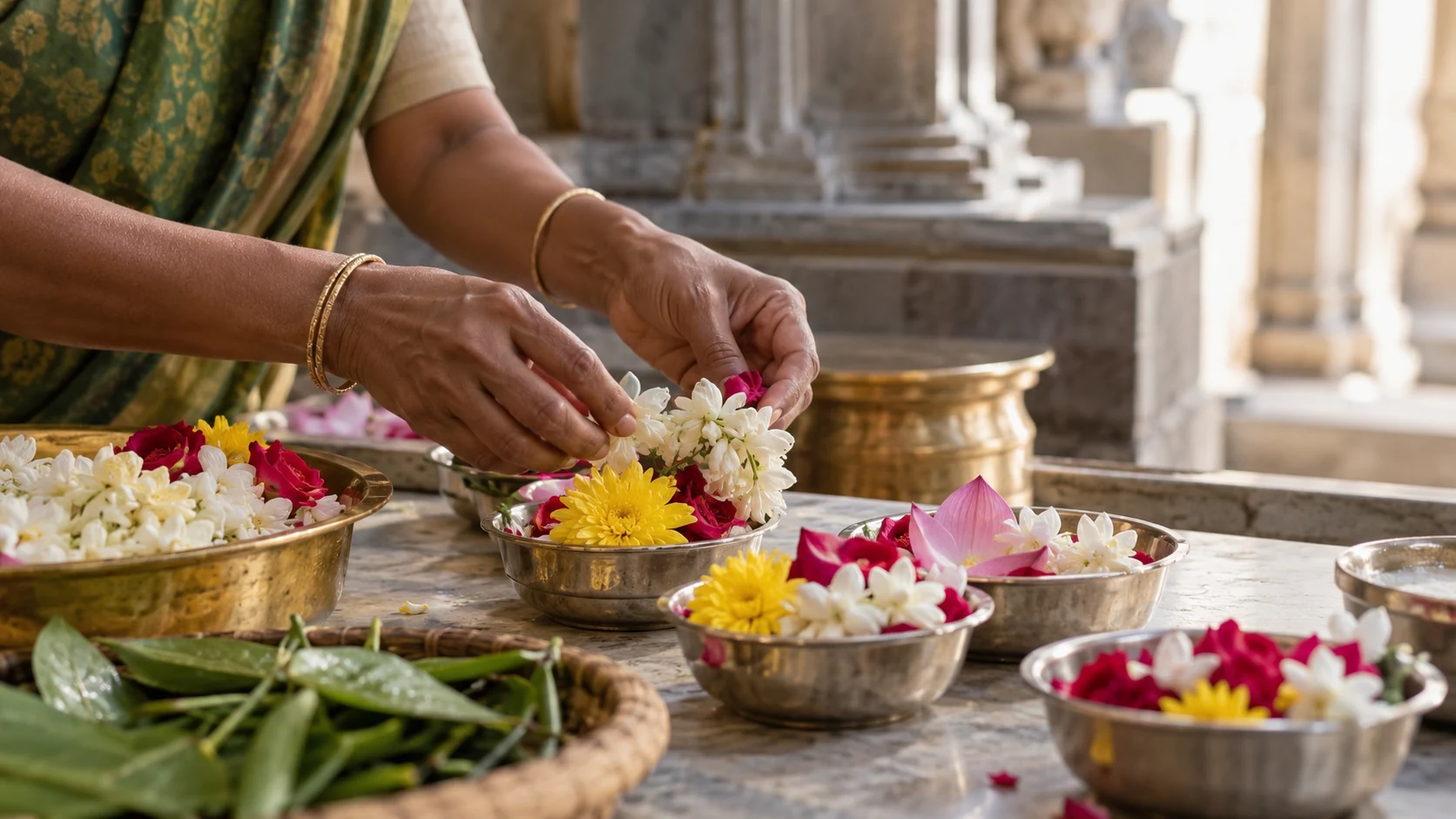
Nandita had pictured her morning at the flower table. She had arrived early at the temple, with enough time to help before joining the observance, and the bowls of fresh flowers were already laid out. Instead, the coordinator pointed towards a broom beside the courtyard. Her disappointment was small enough to hide and real enough to shape what she did next.
She had offered to help because she wanted her visit to include seva. The word carried a personal devotional meaning for her, bound up with attention, gratitude and being useful in a place she cared about. Yet the image she had brought with her was more specific: careful hands arranging colour, something beautiful prepared for a purpose she could immediately recognise.
The courtyard looked ordinary by comparison. A few leaves had gathered near the edges, and visitors would soon begin moving through it. The coordinator explained the area she could sweep and showed her where to put what she collected. Nearby spaces and objects were outside her task. Nandita listened, then glanced back at the flower table, where two experienced volunteers were already working.
She considered asking whether she could join them instead. There would have been nothing wrong with asking about the work, but she knew what was behind the request forming in her mind. She wanted the task that resembled her idea of devotion. The courtyard felt like preparation for the meaningful part, and she had hoped to be included in the meaningful part itself.
Where her attention settled
She began at the far side, moving slowly enough to avoid sending dust towards the entrance. Another volunteer worked nearby without trying to turn the task into a lesson. When she asked where a particular container belonged, he referred her to the coordinator. His lack of ceremony was initially disappointing. Nobody appeared to be marking this moment as the generous contribution she had imagined making.
A folded cloth lay beside a stack of chairs. Nandita reached towards it, then remembered that she had not been asked to rearrange the materials. She left it and checked before moving anything. The answer was simple: the cloth was waiting for another task. Her urge to make everything look finished had almost sent someone else’s preparation out of sight.
As the courtyard cleared, the first visitors crossed it towards the entrance. One stopped to adjust a bag while another waited beside the wall. Nandita saw why the coordinator had asked for that passage to be kept free. The space she had been treating as a background was already part of someone’s arrival.
The thought did not instantly cure her disappointment. When she carried the broom back, she still hoped the coordinator would send her to the flowers. Instead, she was asked whether she could help beside the shoe racks for a while. The entrance was becoming busier. She agreed, then felt a brief irritation at herself for needing the question to be asked so gently.
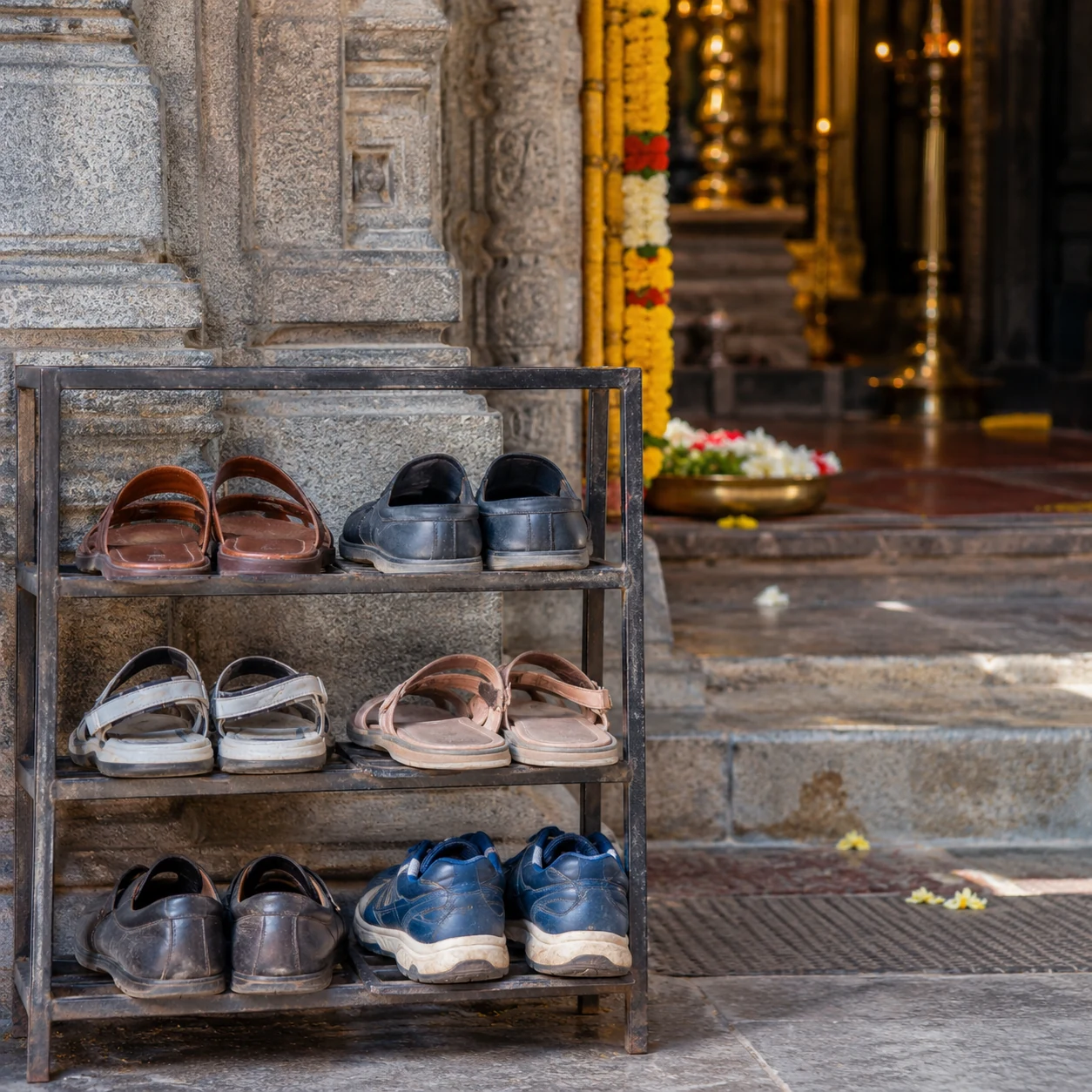
Beside the entrance
At the racks, Nandita’s work was to keep the agreed passage clear and help visitors understand where they could leave their footwear. She followed the temple’s arrangements rather than inventing a more efficient system. When someone had already placed belongings somewhere, she asked before moving them. It took more attention than simply straightening a row until it looked pleasing to her.
A visitor returned looking for a pair that had been placed behind another. Nandita helped make space to see the shelf without treating the moment as a nuisance. A second visitor asked about a practice inside. She did not know enough to answer, so she directed the question to the appropriate person. Being helpful here included leaving religious explanations to those authorised to give them.
From her place at the entrance, she could see part of the preparation table. Someone carried a bowl of flowers past her, and she recognised the work she had wanted to do. For a moment she was tempted to measure the morning by that missed opportunity. Then the visitor beside her asked where to wait for a family member, and she returned her attention to the person actually in front of her.
She still wanted to work with the flowers. But the visitor waiting beside her needed an answer now, not the contribution she had imagined earlier. She pointed out the agreed meeting place and stayed at the racks while the entrance was busy. Her preference had not disappeared; it had stopped deciding where her attention went.
A small choice without an audience
When the flow of arrivals eased, Nandita noticed that a few items had slipped into the passage again. The coordinator was occupied elsewhere. She checked that they belonged to the shared supplies, then returned them to the place already indicated. Nobody stopped to thank her. The passage simply became easier to use, and the next group moved through without knowing it had briefly been obstructed.
The next group passed without slowing. Nandita returned to the rack and checked the lower shelf a visitor had struggled to see. For a while she stopped looking towards the preparation table. There was enough to notice where she was standing.
Before joining the observance, she returned the materials she had used and told the coordinator she was finishing. She did not add more time to prove that she had finally understood the point. Her morning included worship as well as service, and the arrangement allowed for both. Another volunteer remained at the entrance; neither person’s commitment could be read from the difference in their hours.
Later she passed the flower table again. Several bowls stood ready, and the people who had prepared them were clearing their working area. Nandita paused to look closely. She could admire their care without making their task a verdict on her own. Beauty and practical readiness had both required attention, and neither needed to compete for the title of the morning’s real service.
Before leaving, she asked the coordinator what would help on another visit. This time she mentioned the tasks she could manage and the time she could offer, without asking to reserve a place at the flower table. She could still enjoy that work if it was needed.
When she left, the courtyard was no longer empty. Visitors crossed the stone she had swept, absorbed in their own conversations and intentions. There was no visible record of her work in the scene, and she no longer searched for one. She could remember the flowers she had not arranged and still feel that she had spent the morning where she was needed.