

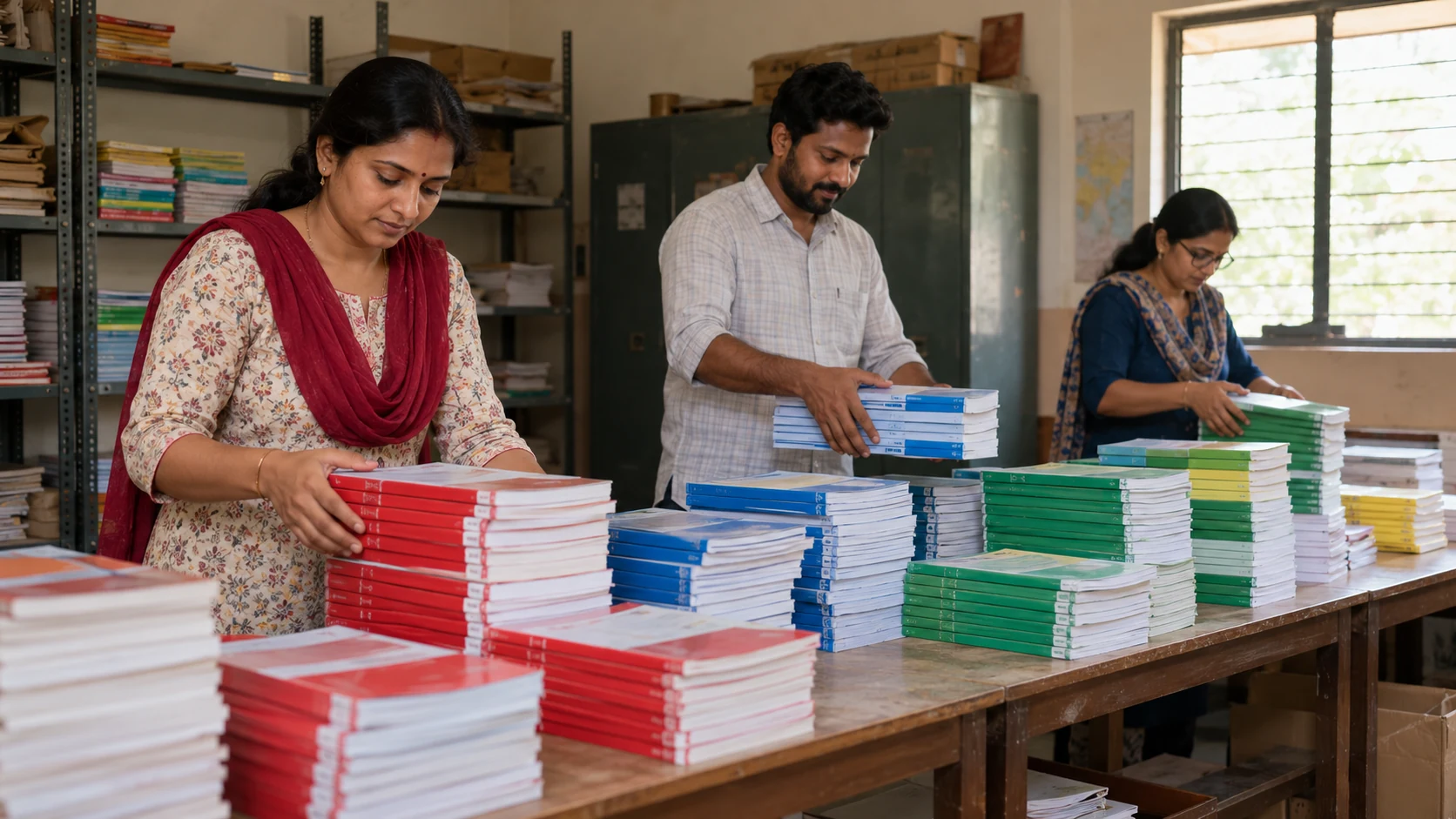
AI-generated illustration.
The Right Books in the Right Bag
The string came away easily, but the first book in the bundle made Meera hesitate. Its cover looked familiar; the standard printed beneath the title did not. Beside her, her mother unfolded the school’s requirements sheet. Across the table, a volunteer was already reaching for the next bag. A donation seemed ready to give; the pupil could not use it as intended.
The room had looked reassuring before the families arrived. Boxes stood beneath the windows, and bundles of similar height covered the long table. Arun, who had helped collect the books, had spent the previous evening brushing dust from covers and replacing torn bags. He knew how much care some donors had taken. One family had wrapped each book separately. Another had delivered a whole set that their child had barely opened.
Meera lifted out a second book. That one was for her standard, but its publisher and edition differed from the school sheet. She did not say that the books were bad. She asked whether these were the ones she was supposed to bring on the first day. Arun could answer questions about the collection. He could not answer that one simply by looking at the neat bundle.
A pile is not yet a set
At the next table, a volunteer suggested exchanging the entire bag for another marked with the right standard. Arun almost agreed. Then he opened it. The label described the previous owner’s class, not a checked list of its contents. Inside were two suitable-looking texts, an older workbook with completed exercises, and a language book that Meera’s school had not requested. Changing the bag would have changed the mixture without resolving her question.
The volunteers paused the ready-made distribution. It was an uncomfortable decision with people waiting and so much material visibly available. Arun explained that they needed to check the bags against the requests rather than hand out another uncertain set. Meera and her mother moved to a chair with their sheet. They were not asked to persuade the room that their requirements were reasonable.
A teacher helping that morning drew three columns on scrap paper: confirmed match, needs checking, and not requested for this pupil. She compared the standard, subject, language, publisher and edition wherever the school sheet specified them. Where the description was incomplete, she set the book aside for clarification. She did not turn a similar cover into permission to substitute it.
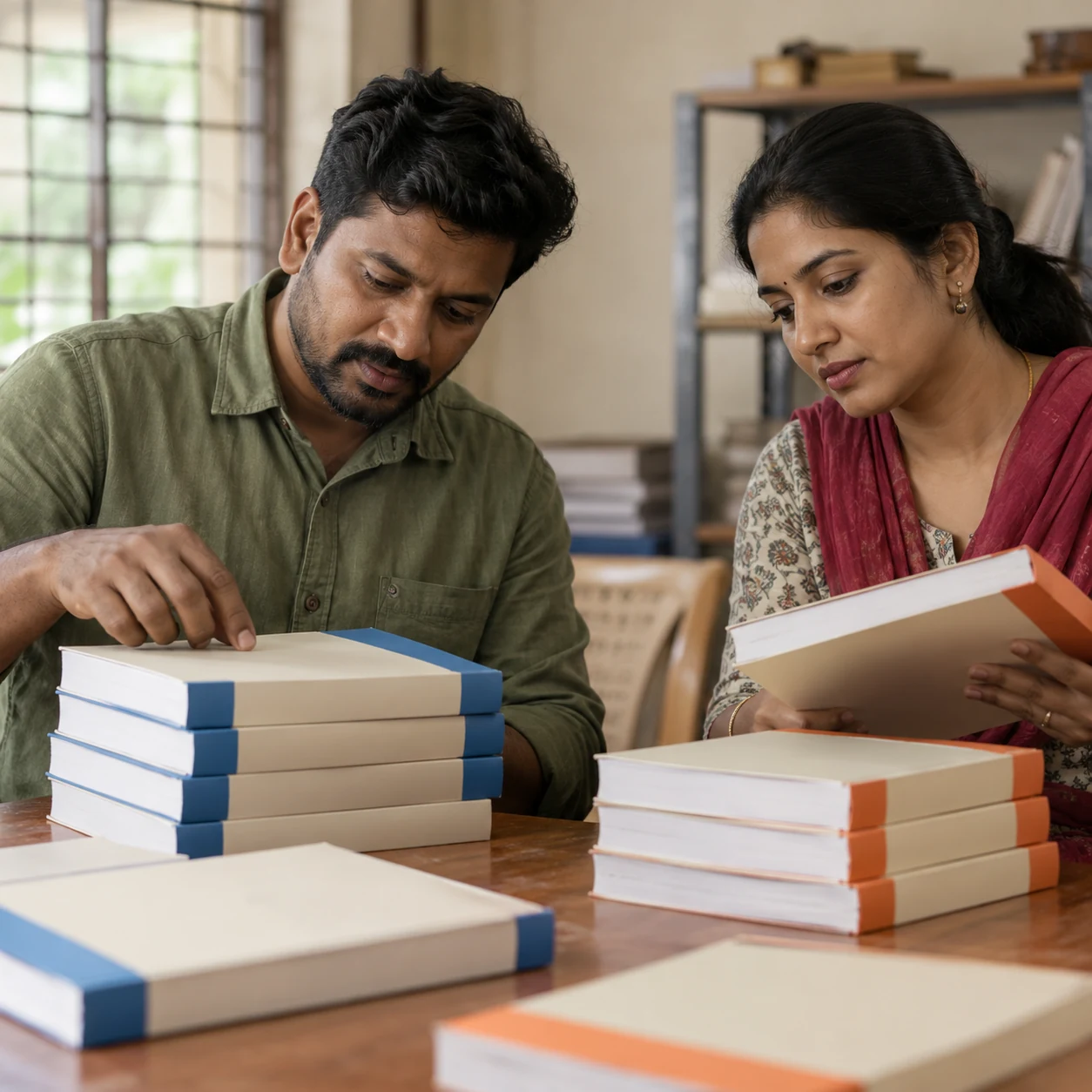
Arun set the two covers beside the school sheet. Both books were clean; only one matched. Until then, he had been sorting by condition and the class written on the bag. Now the pupil’s list, rather than the donor’s label, determined what belonged in the set.
Making room for an honest gap
They opened the bags already prepared for collection. Instead of matching their height, the volunteers arranged books by the details that mattered to the requests in front of them. Meera helped compare the printed information on two covers while the teacher checked the uncertain items. The finished pile beside her was smaller than the original bundle. It also had a clear reason for each book being there.
One requested subject was still missing. Arun looked at the nearby stack of older editions and felt the temptation to fill the space. A complete-looking set would be easier to give, and easier to describe afterwards. The teacher left the gap visible. The family needed to know which requirement remained unmet, rather than discover the substitution later while preparing for school.
Meera’s mother asked whether they should wait for the missing book. Arun had no confirmed source for it. He said so, and they agreed that the family would leave with the matched books and the missing item clearly marked on their own list. There was no promise of a later delivery. The useful part of the morning did not have to be inflated into a solution to every expense of the new term.
A volunteer brought another family’s sheet across. It requested one of the books removed from Meera’s bundle. After checking the edition and pages, she placed it in that family’s pile. Arun moved the remaining unmatched books to a separate table, where they would not be mistaken for ready sets.
The donor at the doorway
A donor arrived with another carton while the sorting was underway. Seeing several of his earlier contributions on the unallocated table, he asked whether there was something wrong with them. Arun showed him the difference between condition and requirement. A book could be well kept and still be an edition nobody attending that morning had requested. The donor opened his carton before leaving rather than adding it to the finished bundles.
They found a few clear matches and several items that needed a different destination. The team did not nominate another school as an automatic recipient. They set those books apart until someone could establish a genuine request. Nor did they call completed workbooks equivalent to blank ones. If a recipient wanted material for a different purpose, that purpose would need to be understood rather than assumed on their behalf.
The queue moved more slowly. A volunteer began checking the next family’s requirements while the current set was assembled, giving the waiting time a purpose. Some books stayed on the table, but fewer families reached the end with a bag they could not explain.
As Meera put the confirmed books into her bag, she stopped at the last one and checked its title against the sheet herself. Arun waited. Earlier, he had been eager to move the queue forward. Now that brief comparison seemed part of the distribution, not an interruption to it. Her mother folded the list with the missing subject still marked, ready to make a separate arrangement.
At closing time, unopened cartons still stood beneath the windows. Arun took a blank sheet and wrote the details the team would ask for before the next collection: standard, subject, language and the school’s specified edition. Meera had already left with a smaller bag and one missing item marked clearly on her list. Next time, he wanted to begin with that list.