


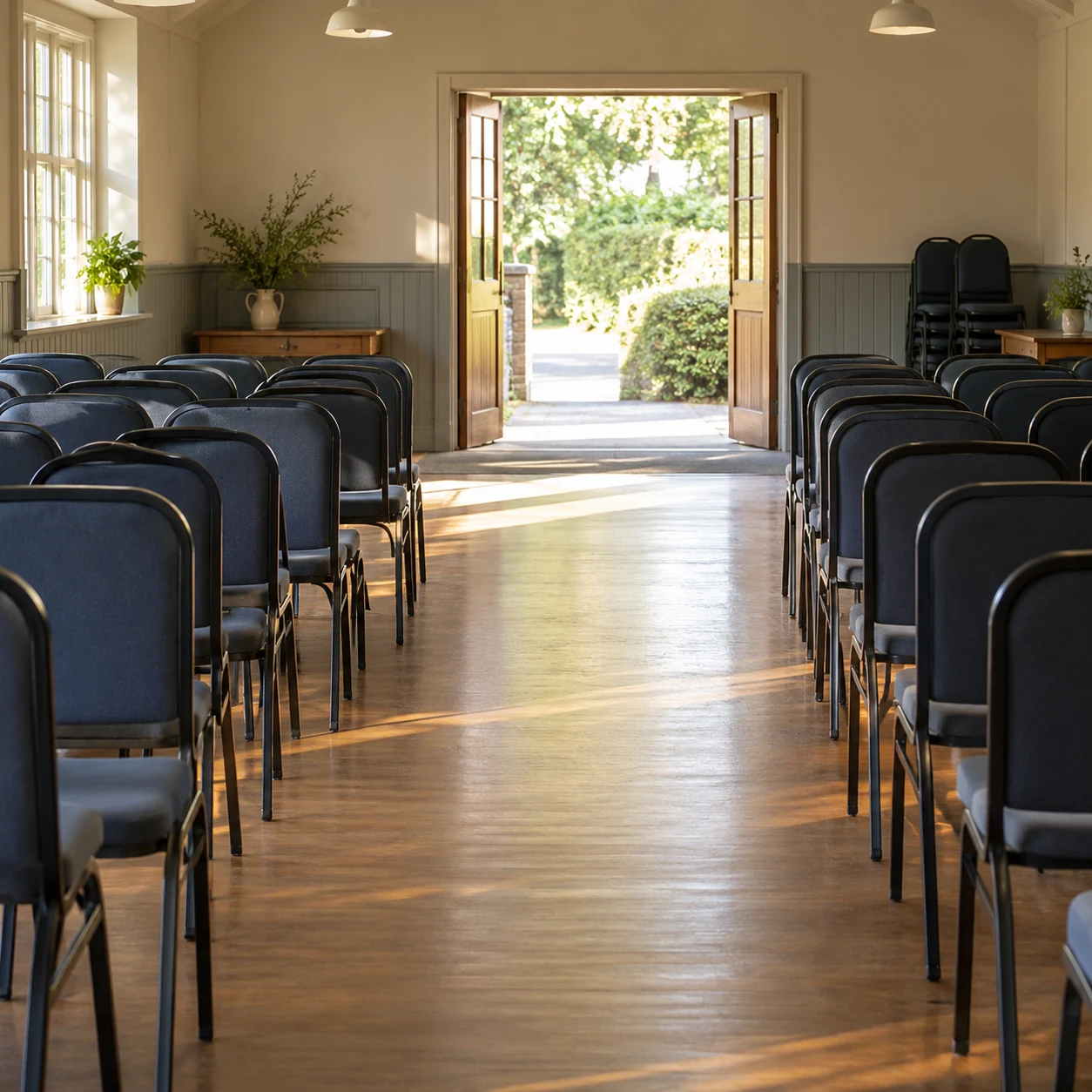
AI-generated illustration.
Before a Community Event Goes Public
An invitation leaves the planning group and reaches someone who knows none of the background. This edition follows that change of audience—and the small details that make a welcome usable.
Newsletter · Web edition
An organiser may recognise the venue from a photograph and know what “the usual time” means. A new reader cannot. The invitation has to carry enough of that missing context to support a decision. In this edition, we look at a notice as it moves from a familiar circle into a wider community.
What does the invitation actually offer?
Begin with the activity itself. Will people watch a demonstration, join a discussion, play a sport or help with a task? A warm headline is more useful when the reader can picture what they would be doing.
Now compare the headline with the conditions. “Everyone welcome” and “members only” cannot quietly coexist. A picture suggesting a large programme should not stand in for one short session. The first impression is part of the promise, even when the detail is technically correct further down.
Separate what is confirmed from what is still being arranged. A provisional venue is not a settled location. An unknown cost should not be disguised by an attractive invitation. Resolve the details people need before asking them to commit time or travel.
What an insider knows and a newcomer needs
Take a skills demonstration discussed among familiar members. They may know that tools are supplied and places have particular conditions. Once the notice reaches a new audience, those shared assumptions disappear. The information needs to travel with the invitation.
Making an activity visible to more people does not automatically make it open to everyone. Explain who can participate and which questions to ask before proceeding. A reader should not need to recognise a community’s name to understand the invitation.
Check the image and wording together. Use material suitable for publication, with the necessary permission. A planning photograph can expose information that was never meant for a wider audience. Share the invitation, not the private organising conversation behind it.
Follow the next step all the way through
Open the destination named in the notice. Does it explain the activity, accept an enquiry or offer registration? These are different steps. The link label should describe what people will actually find, rather than what the organiser hopes to offer later.
Then ask what the person receives after taking that step. An enquiry is not a reserved place. A request awaiting approval is not confirmation. Readers need to understand the difference before arranging transport or making other commitments.
If a process is unfamiliar, identify where someone can ask for help. Assistance should explain the required route, not create a competing promise of admission. Keep the answer consistent across the notice, the destination and the person responding to questions.
Samajya’s current website presents event information; it does not register participants or take payments. The same principle applies wherever an invitation is shared: describe the available next step accurately and let the responsible organiser confirm the arrangements.
The practical details worth a second look
Read for date, start and finish time, location, costs where relevant, what to bring and how to respond. A reliable finish time may matter to someone arranging a lift just as much as the start time matters to the host.
Use checked information about access and facilities. Steps at the entrance, seating arrangements or a contact for a private question can help more than a broad claim that a venue suits everyone. Avoid asking people to disclose personal circumstances in a public group.
Finally, consider a change. If the time or location moves, how will people who saved the earlier notice find out? Keep a current description and a way to reach confirmed participants through agreed channels. Updating a picture alone may not reach them.
The final read belongs to someone new
Before sharing more widely, show the notice and its destination to a person outside the planning group. Ask them to explain what is happening, whether they could take part and what they would do next.
Listen for the question the team forgot to answer. If the reader cannot tell whether materials are supplied or whether a place is confirmed, improve the information. You are checking understanding, not asking for approval of the design.
A good invitation reduces the distance between interest and an informed choice. For your next notice, try that newcomer’s read before the first share. The welcome becomes more convincing when the practical details support it.