


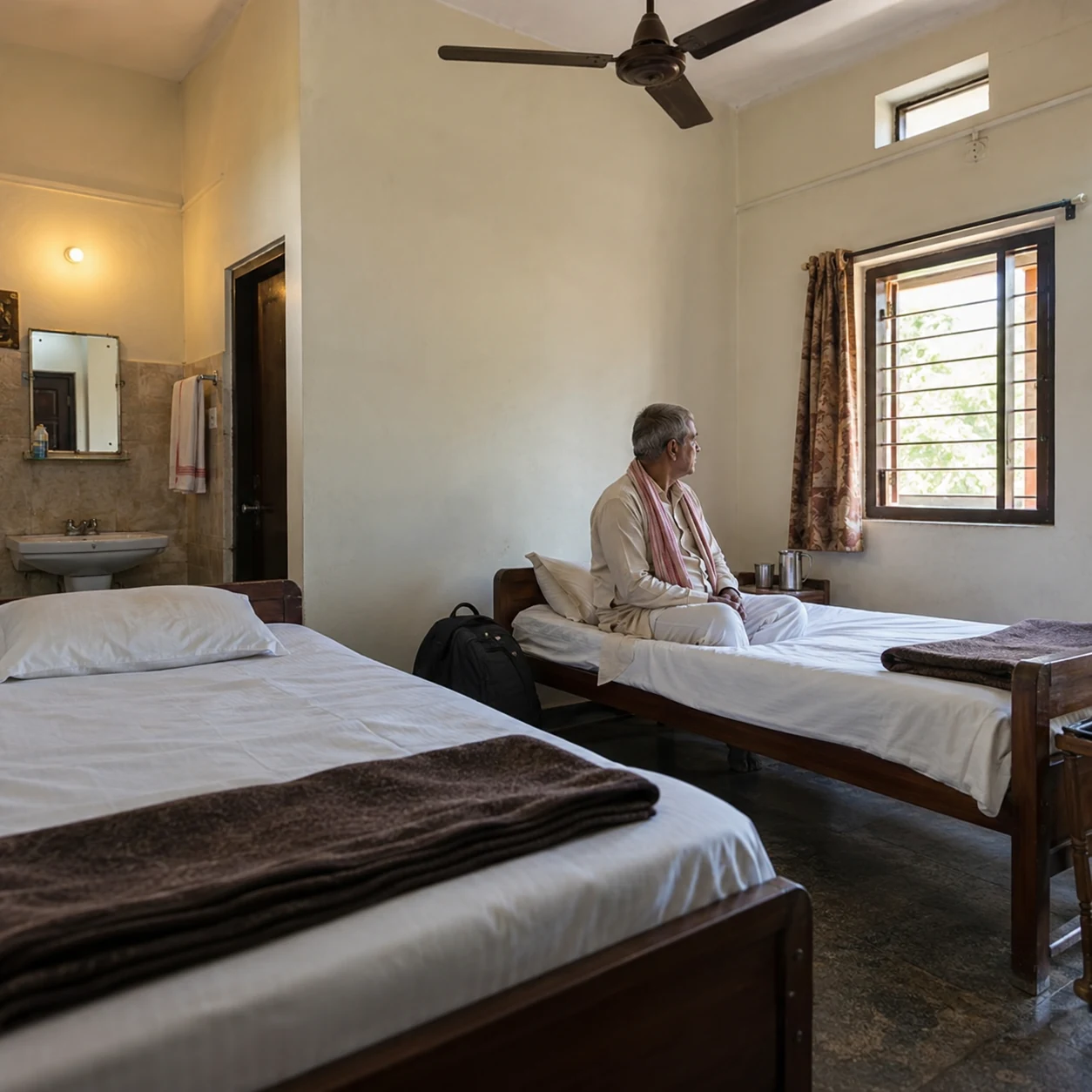
AI-generated illustration.
A Dharamshala Stay Starts With the Right Questions
A dharamshala may look suitable in a photograph yet leave important questions unanswered for the people travelling. Can everyone reach the rooms comfortably? Will arrival time work? What has actually been confirmed? A clear enquiry helps a family or community group settle those details before the journey.
For a group travelling together, one unresolved detail can affect everyone. A room upstairs may suit most travellers but not the person who needs a step-free route. An early arrival may leave families waiting if access starts later. These are not reasons to expect every property to offer everything; they are reasons to ask specific questions while another arrangement is still possible.
Before you enquire: describe the stay, not just the room count
Prepare the information needed to assess the request. State the arrival and departure dates, the number of people and the room arrangement you are seeking. If timing is uncertain, say which part is provisional rather than asking the host to infer it.
For example, a family might need two rooms close together and an entrance without steps. Stating only the total number of travellers leaves both requirements invisible. Describe the arrangement that matters, without sending medical histories or unrelated personal information to explain a simple practical need.
Distinguish essential needs from preferences. A preferred view is different from an entrance someone cannot use. If a detail could determine whether the stay is workable, raise it early rather than leaving it for the final exchange.
Keep one clear version of the request. When several relatives or organisers contact the property separately, dates and room assumptions can drift. A named coordinator can collect the group's requirements and keep everyone informed without turning every question into a new, potentially conflicting enquiry.
First reply: establish suitability and eligibility
Ask whether the property can consider the stay you have described and whether any eligibility or participation requirements apply. Do not assume that public information about accommodation means every request can be accepted.
Clarify what information the responsible contact needs before deciding. If a requirement is unclear, ask for its practical meaning and the appropriate place to verify it. Avoid committing the group on the basis of an interpretation nobody at the property has confirmed.
Then check the facilities that matter to the actual travellers. Rather than asking only whether the accommodation is accessible, ask about the relevant entrance, steps, room location and bathroom arrangement. A broad label may not explain whether a particular need can be met.
The same principle applies to bedding, washing facilities, parking or meals. Ask what is included, what requires a separate arrangement and what is unavailable. A photograph may show a feature without establishing that it belongs to the room or dates being offered.
When an option is offered: make the terms understandable
An expression of interest, a provisional hold and a confirmed stay are different stages. Ask which stage the discussion has reached and what action, if any, is needed to move forward.
Clarify the total basis of the charge or contribution, the period it covers and any separate costs relevant to the request. Avoid comparing options solely through a headline amount if their arrangements differ. A lower stated figure tells you little until you understand what it includes.
If payment is requested, use the property's confirmed process and establish who is authorised to receive it. Do not treat an unrelated forwarded message as sufficient confirmation of new instructions. Keep the written terms and the record of any authorised payment together with the accommodation correspondence.
Ask what happens if the dates change, fewer people travel or arrival is delayed. Establish how to notify the property and which agreed charges or conditions may apply. Record the answer with the offer so that a later change can be discussed against the same understanding, rather than someone's memory of a telephone call.
Confirmation: collect the details you will actually use
A useful confirmation identifies the property, agreed dates, accepted accommodation arrangement and any remaining conditions. It should also make clear who to contact about a change.
Read it against the request rather than assuming the two match. If you asked for a particular room arrangement and the response uses a broader description, clarify the difference. A small ambiguity before travel can become a difficult problem when the group arrives.
Keep the arrival instructions accessible to the people who need them. Confirm the expected arrival window and the process if the group is delayed. Where the property asks for particular documentation, check the actual requirements beforehand rather than relying on what someone remembers from another visit.
Make sure the travellers understand the arrangement too. A coordinator's confirmation does not help if the rest of the group expects different facilities, meal provision or departure timing.
Where digital discovery helps, and where it stops
Digital discovery can help a family find the right contact and prepare a useful enquiry. A helpful accommodation description explains the type of stay, the facilities that can be discussed and how to ask about a particular visit. It cannot settle details that depend on the group's dates and needs.
The Samajya website does not provide live room availability or confirm accommodation bookings. Contact the responsible property directly for the proposed stay. A listing or general service description is an introduction, not an accepted reservation.
Before relying on an online description, check who can confirm it. If an old photograph and a current reply differ, ask about the feature your group needs rather than trying to resolve the contradiction yourself. Keep the answer with the agreed dates and room arrangement.
Arrival and departure: honour the agreement
On arrival, confirm the practical arrangements with the responsible contact, especially if something differs from the written understanding. Raise a concern promptly and specifically rather than letting the group build plans around an assumption.
Ask about the relevant use of shared spaces, quiet periods, meal arrangements or other house expectations. Follow the property's actual guidance rather than treating a previous stay elsewhere as the rule.
Before leaving, settle any agreed outstanding matters, return items or keys as instructed and explain any issue the host needs to know about. A respectful stay depends on clear expectations in both directions.
Before departure, bring the essentials into one short note: agreed dates and rooms, arrival instructions, important facilities, outstanding conditions and the responsible contact. Share it with the travellers who need it. A well-prepared stay begins with everyone relying on the same arrangement, leaving more attention for the visit itself.